Three Films, One Partition: How Main Vaapas Aaunga, Dhurandhar, and Ikkis converge
The first time I read about the Partition of India, it was in school textbooks. One among a series of events that decided the map of independent India as we know it today. But little did history tell me about what that particular piece of geography did to people’s lives beyond 1947.
That burden, across multiple pieces of pages and physical reels and gigabytes, was left to art. And politics.
But we will come to the latter later.
Over the last six months, we have seen three disparate movies that are entirely different in both writing and execution. Yet the binding wound across all three is identical: Partition, and the way its trauma transforms as it carries and reveals itself across generations.
Someone who was sixteen years old during Partition would be in their mid-nineties today. Someone who was a child would still be alive. Partition is not ancient history to them. It still exists as a living memory. The people who experienced it first-hand have not completely disappeared from the world yet.
That is how Imtiaz Ali’s Main Vaapas Aaunga opens.
While the film ultimately falters for me on a purely cinematic level, it would be a lie to say it didn’t affect me. One specific thread left a deep, echoing impact — a thread I wished the film had spent far more time on, but one that gives me the perfect occasion to write this edition of Frame of Reference: generational trauma.
Not Partition.
Trauma.
More specifically, what happens when trauma remains unresolved for generations.
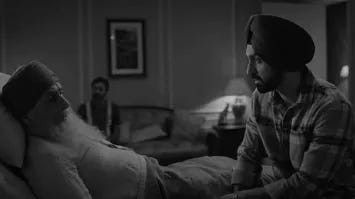
In Main Vaapas Aaunga, the agony of leaving a love, a promise, and a family behind forces a young Ishar Singh Grewal — played with raw yearning by Vedang Raina, who eventually ages into Naseeruddin Shah — to repeatedly cross borders, first illegally, then legally. But when the dust of history settles and the truth is learned, the anger that emerges has no systemic outlet. It gets bottled up. He is no longer the version that was meant to exist on the other side of the border. Instead, Ishar becomes an abusive, unloving parent.
His son, played by Rajat Kapoor, grows up loving a father who never quite learned how to love in return. He inherits confusion alongside affection. He spends a lifetime trying to reconcile the man who sacrificed so much with the man who never allowed himself emotional closeness again.
The next generation, played by Diljit Dosanjh, inherits none of those memories but all of those patterns. His anxiety manifests as deep commitment issues and a chronic inability to stick to a career path. Most tellingly, he channels this century-old grief into a stand-up comedy routine — using humour to desperately cauterize a wound which wasn’t inflicted upon him directly, but one he still deeply carries.
Look at that pattern from grandpa to grandson. The lost love. The irrational fear of sticking to something and someone for long. The inability to be in the same place forever.
Into this psychological landscape steps Sriram Raghavan’s Ikkis and the true story of Second Lt. Arun Khetarpal.
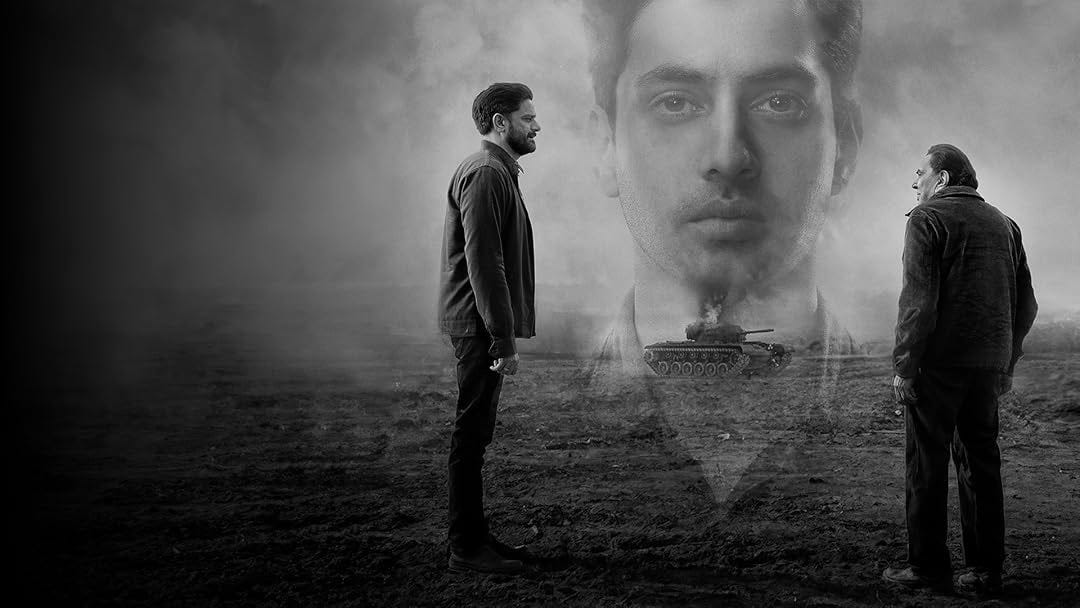
A daredevil officer in the Indian Army, Khetarpal commanded the tank Famagusta of the 17 Poona Horse during the Battle of Basantar, where he was martyred and became the youngest recipient of the Param Vir Chakra after single-handedly destroying ten enemy Patton tanks.
Arun was a boy whose father was an army brigadier, whose grandfather fought in World War I, and whose great-grandfather served in the Sikh Army. While the instinct to protect loved ones is hardcoded into the human gene, carrying the cross of multiple generations of military honour is a heavy boon and bane. Therein lies both the immense bravery and the ultimate tragedy of Arun Khetarpal.
When Arun Khetarpal died, the grief that followed did not belong solely to a nation. It belonged first to a father, who carried it for three decades.
That grief eventually led Brigadier Madan Lal Khetarpal across the border to Pakistan, where he was received by Khawja Mohammad Naser — the commanding officer of 13 Lancers, the Pakistani regiment whose counterattack Arun’s lone stand had stopped. Two men formed by the same battle, now in the same room: one who had lost a son, one who had lost soldiers to that son’s refusal to retreat.
The letter Naser wrote to Khetarpal afterward — calling Arun “an insurmountable rock between victory and failure” — is one of the more remarkable documents to come out of that war.
Not for the praise. For what it required of the man who wrote it.
Without a rare glimmer of institutional grace facilitating their meeting, that shared weight would have remained buried in agonising silence. It is a profoundly poignant moment — two men finding in each other something that no government briefing could ever have provided.
History often reduces wars to victories and defeats.
Geography gets redrawn.
Grief does not.
Both these stories are united by a particular location – Sargodha. Ishar Singh Grewal left Sargodha in 1947 with a promise he spent the rest of his life unable to keep always trying to return even at the grand old age of 95. Arun Khetarpal’s family was from Sargodha — refugees who crossed the line and built a life on the other side, a life whose full inheritance Arun gave back at 21, in 1971.
Sargodha today is known for its kinnow orchards. The California of Pakistan, they call it. A city of oranges. Orange is the colour in the Indian flag that stands for valour and sacrifice. It is also, in the last decade, the colour a political party has made so thoroughly its own that the two meanings are increasingly difficult to hold apart. What was once a shared symbol has become a contested one. What stood for everyone now stands, in too many conversations, for a particular kind of anger.
While it is breathtakingly beautiful when the grief of two nations is healed by two individuals, it becomes terrifyingly dangerous when that same grief is weaponised by the State into a tool of anger. Enter Aditya Dhar’s Dhurandhar duology and its protagonist, Jaskeerat Singh Rangi.
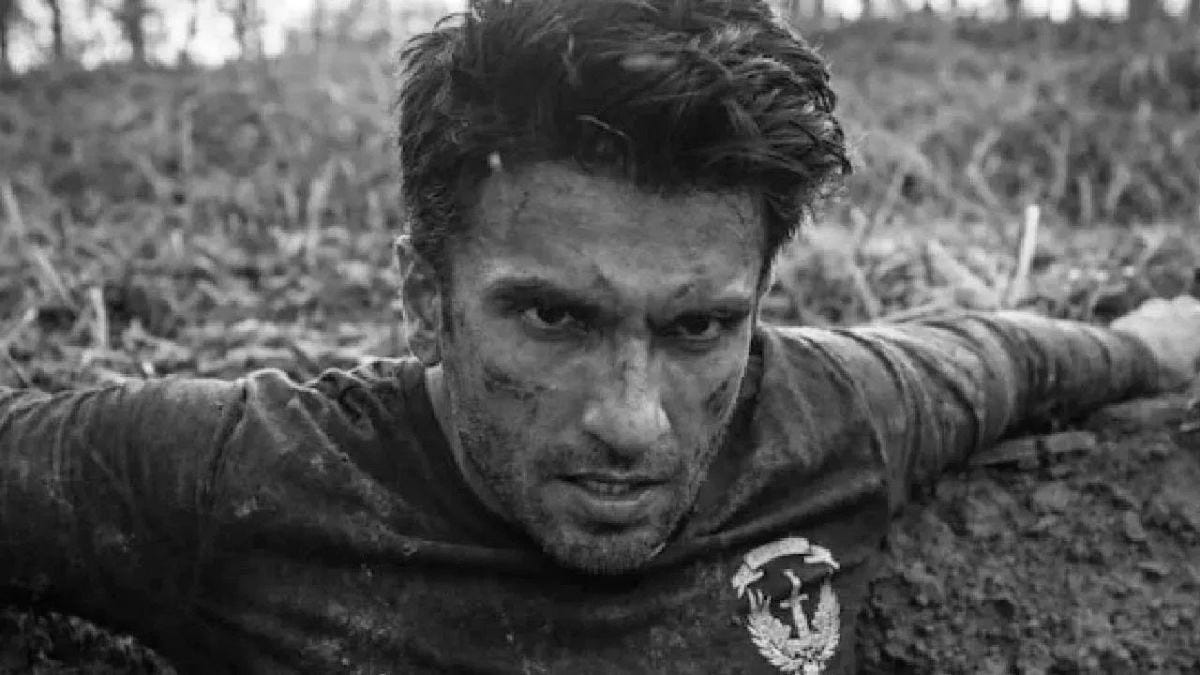
An army cadet in training, Jaskeerat chooses absolute vengeance the moment he learns of a tragedy inflicted upon his family in his absence. A man who originally signed up to protect the many is forced to kill the few to protect a handful. He completely bypasses institutional justice to extract raw retribution.
The judiciary, rightfully, incarcerates him. But the State — reeling from decades of unhealed post-Partition vulnerabilities — recognises his trauma-induced rage and co-opts him, turning him into their rogue right hand of international vengeance. The State willingly harvests a byproduct of historical trauma to wreak more trauma on its external enemies.
His personal trauma becomes political utility.
This is where inherited trauma becomes most dangerous.
Not when it exists.
When it is weaponised.
States are often built upon collective memories.
Some are memories of triumph. Others are memories of humiliation, invasion, loss, or betrayal.
The challenge is not whether those memories exist.
The challenge is what institutions choose to do with them.
Do they build systems that help citizens heal?
Or do they continually reopen wounds because wounded people are easier to mobilise than healed ones?
This is where all three films unexpectedly converge.
Each begins with an individual. Each ends with a system.
A young man loses a future and becomes incapable of emotional intimacy.
A father loses a son and carries grief for decades.
A cadet loses family and chooses vengeance for the State and at the end is abandoned both by his family and by the State.
Personal pain becomes family pain.
Family pain becomes community memory.
Community memory becomes political narrative.
Perhaps this is why Partition continues to matter almost eighty years later.
Not because the people who experienced it are still alive, though some are.
Not because borders remain disputed, though they are.
But because the emotional consequences of that event continue to ripple through generations that never witnessed it and only inherited it.
And every generation must decide what to do with that inheritance.
It is telling that within a single six-month window, Indian screens gave us three completely distinct films featuring three different Punjabi protagonists whose entire destinies were set in motion because Partition happened. Every single one of their actions was a delayed reaction to a trauma they experienced directly, inherited through family lineage, or absorbed from the community around them.
Emerging research in epigenetics suggests that trauma travels not only through memory and story but through the body itself — that the children of the wounded carry something of the wound even when nobody tells them the history. The research is still being mapped and contested. But any family that has watched grief pass from grandparent to parent to child, without anyone telling where it came from, will recognise what the science is trying to describe.
The greatest gift any generation can give the next is to have done the actual work of healing.
Not performance.
Not the conversion of grief into pride — which is seductive precisely because it feels like strength.
The slower, less photogenic work of refusing to pass the wound forward unchanged.
What we should ask of present and future governments — across every ideology — is specific.
Other countries have tried. South Africa built a Truth and Reconciliation Commission after apartheid. Rwanda. Canada. Chile. Forty countries, in varying forms, have attempted the same thing: give the wound a name, give it a room, let the people who carry it speak, and see if something shifts in the generation that follows.
India’s own Supreme Court proposed a version of this for Jammu and Kashmir in 2023. Justice Sanjay Kishan Kaul, in his ruling on Article 370, recommended a Truth and Reconciliation Commission to address intergenerational trauma from decades of human rights violations. He said, plainly: truth-telling paves a way for reconciliation.
The government has not acted on it. What India chose to do instead, in 2021, was declare August 14 a day of Partition Horrors Remembrance. The newly elected West Bengal state government similarly institutionalized June 20 as a day to remember the state’s own fracturing. The choice of both these dates was not an accident.
Ritwik Ghatak in his Partition trilogy did not just remember Partition. The Arts and Cultural Heritage Trust that curated the Partition museums in Amritsar and Delhi did not just remember Partition. When 1947 Partition Archive, a non-profit collective, chose June 3 as Partition Remembrance Day, it did not just remember Partition.
Remembrance can be an act of healing, as evidenced by the people.
It can also be an act of reopening, as evidenced by the governments.
It would do well to know the difference between the two.
We can build systems that honour that need. Or we can keep pointing it at enemies.
The people who survived Partition deserved the opportunity to heal.
So do their children.
So do the generations that inherited a border they never crossed.
What we pass forward does not have to be the wound.
Every generation inherits something from the one before it.
The question is whether we choose to inherit the grief, or the healing that came after it.


You May Also Like